

Teaching life skills through drama and imaginative play
Welcome to Pyjama Drama!
Established in 2005, we are experts in drama and imaginative play for young children. Everything we do develops children’s life skills, helps educators meet curriculum objectives, and ensures children have enormous fun along the way! Our many incredible customer reviews, show not only that our approach works, but that it works for children the word over!
For educators, we offer in-person training and workshops, online courses, a curriculum for the Early Years, an anti-bullying program for Primary Schools, plus sessions in schools and nurseries that are delivered by our incredibly talented franchisees. And for parents and carers, we offer 5star-rated classes, shows, and birthday parties.
BOOK IN-PERSON TRAINING FOR AN EARLY YEARS SETTING, CONFERENCE OR INSET
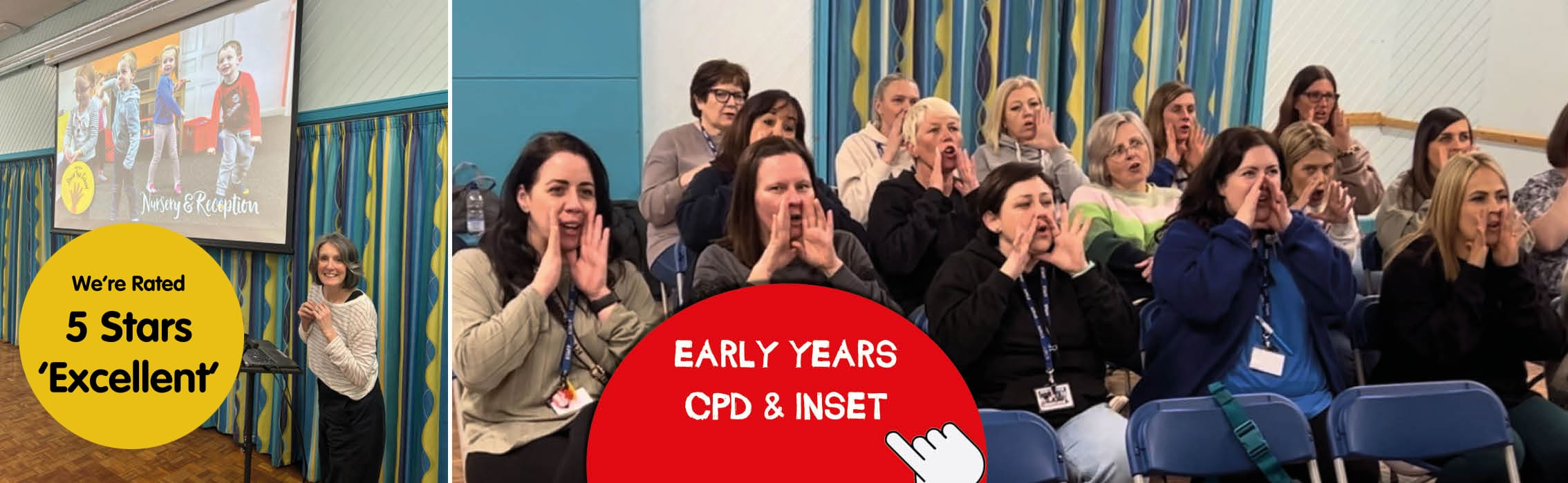
We offer in-person training opportunities for early years settings and teams in schools who want to integrate drama and imaginative play into their curriculum, and develop their children’s life skills. Delivered by a Pyjama Drama expert, your team will leave our training feeling motivated, inspired, and with tried-and-tested activities and resources they can use the very next day to make a demonstrable impact on children's outcomes. Take a look at our range of in-person training opportunities and learn how to use drama to develop language and communication, personal, social and emotional skills, and more!
Deliver our curriculum in your preschool
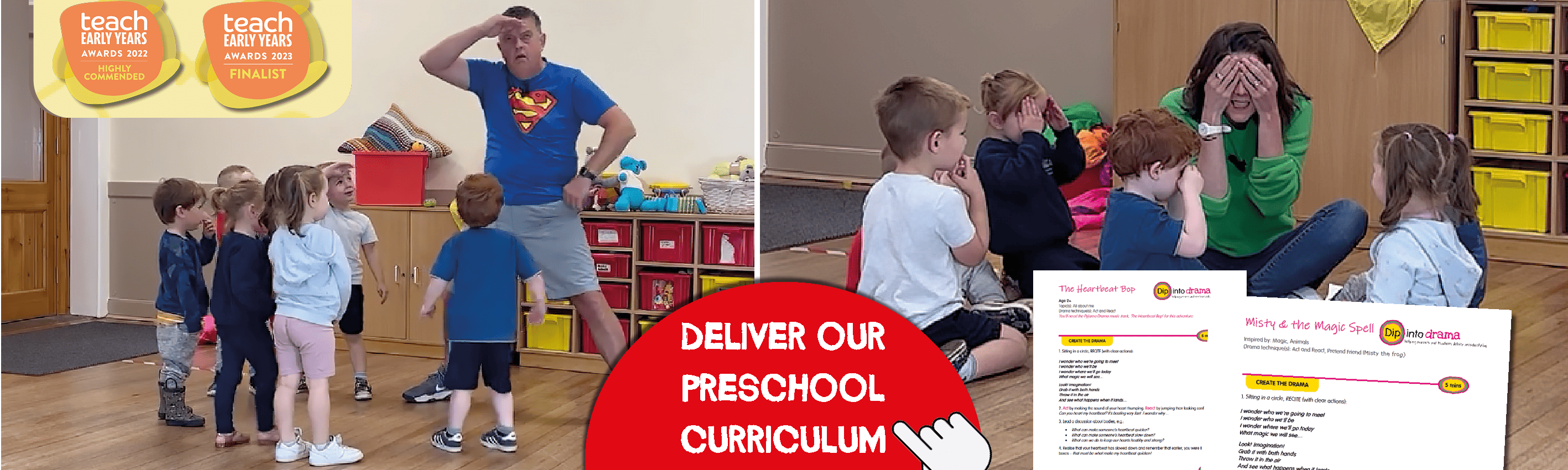
You don’t have to be a drama ‘expert’ to deliver our award-winning curriculum, ‘Dip into Drama’. With 78 easy to follow lesson plans and prerecorded training, anyone, no matter what their experience of drama, can quickly learn how to lead imaginative play and provide opportunities for children to work towards their early learning goals.
BOOK A CLASS, PARTY OR SHOW
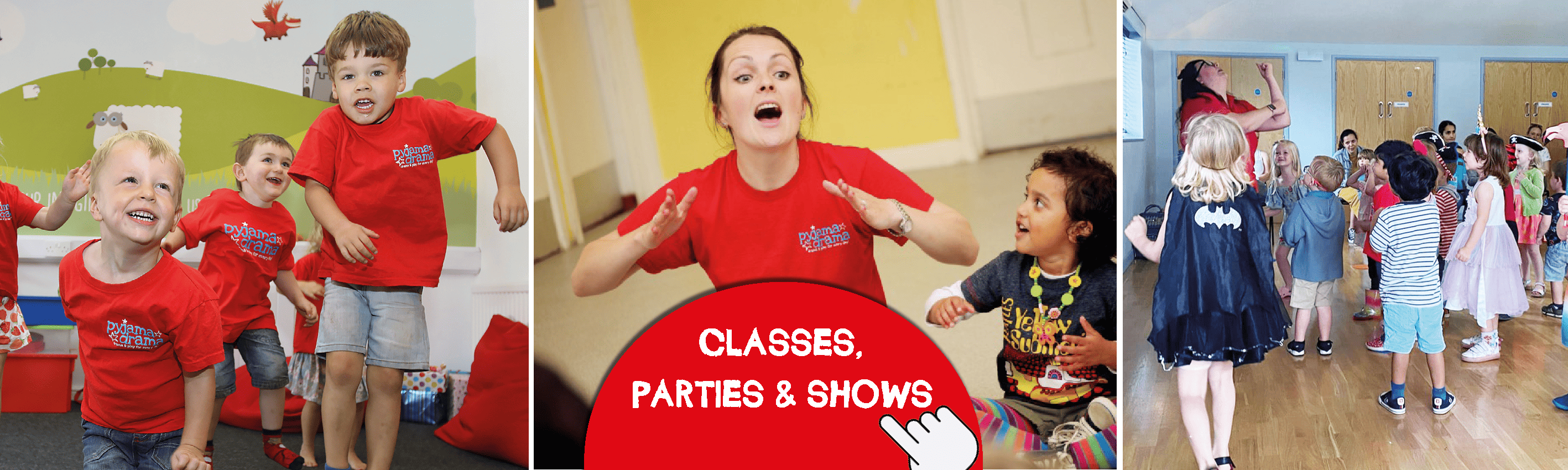
Imagination lies at the heart of our programme and in each class, party or show, children sing, dance, pretend, play, go on exciting adventures, and explore magical lands together - all whilst developing life skills!
Nurseries, find out more here
Schools, find out more here
Parents and carers, find a public class or show, or book a birthday party
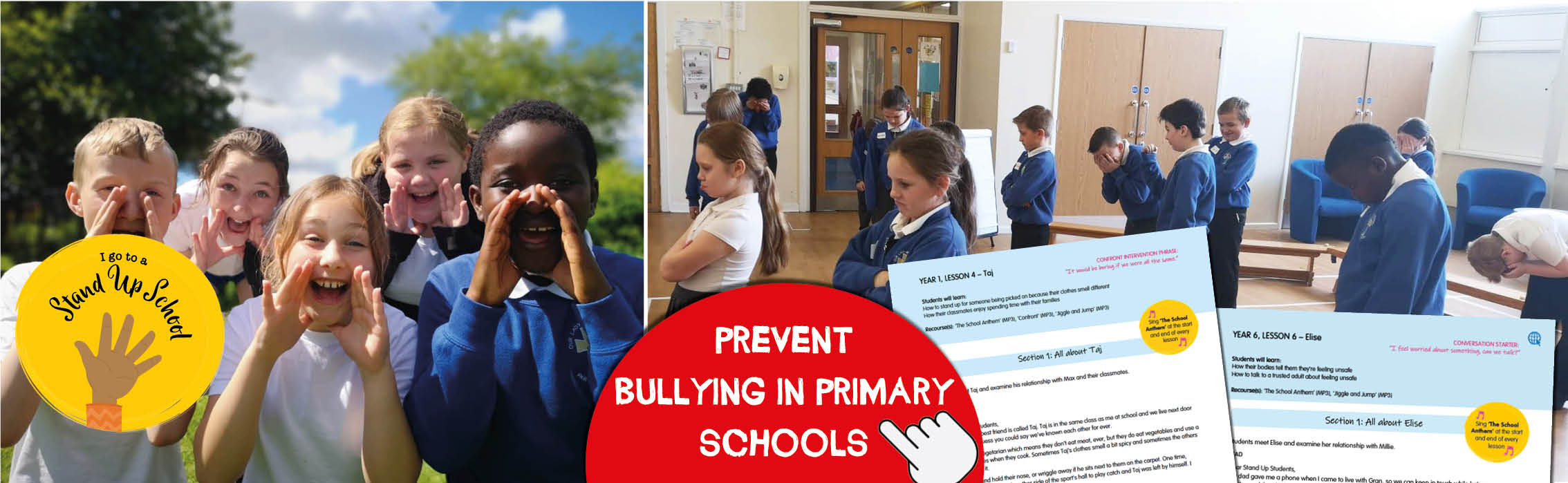
Use drama to prevent bullying in Primary Schools!
Learn how to deliver our Primary School curriculum, 'Stand Up and Act Out' and nurture a truly inclusive school where children are open, curious, kind, and have the confidence, skills, and vocabulary to stand up for themselves and each other as respectful Upstanders! Become a Stand Up School!